Musings from Philippe

Sailing, Mountains, Music, and Technology

The top 20 Universities In the world and their most successful alumni, including Larry Page (Google), Gordon Moore (Intel), Elon Musk (Tesla, SpaceX) and Philippe Kahn (Camera-Phone, Fullpower).

Philippe Kahn, notable ETH Zurich alumni

ETH Zurich in Switzerland,  one of the top leading universities in technology and science in the worldwhere Einstein studied and taught was founded in 1855, currently counts over 18,500 students including 4,000 doctoral students from 110 countries. The ETH has helped educate some of the world’s most famous big thinkers, including Albert Einstein and many Nobel prize winners. Fullpower CEO and founder Philippe Kahn was selected as the notable alumni for The ETH world ranking. Alumni Philippe Kahn is known for making the first camera phone solution to share pictures instantly on public networks, and has founded three successful technology companies: LightSurf Technologies, Starfish Software, and now Fullpower Technologies, creator of the Sleeptracker IoT Smartbed platform.

Philippe Kahn, notable ETH Zurich alumni

ETH Zurich is consistently ranked among the top 5 universities in the world in engineering, science and technology together with Stanford, Berkeley, MIT, Cambridge University  in the QS World University Rankings.

The list of schools includes the ETH Switzerland, the University of Pennsylvania (USA), Harvard University (USA), Yale University (USA), University of Southern California (USA), Princeton University (USA), Cornell University (USA), Stanford University (USA), The University of California, Berkeley (USA), University of Mumbai (INDIA), London School of Economics and Political Science (UK), Lomonosov Moscow State University (RUSSIA), University of Texas (USA), Dartmouth College (USA), University of Michigan (USA), New York University (USA), Duke University (USA), Columbia University (USA), Brown University (USA), Massachusetts Institute of Technology  (USA)

View the article at The Hans India


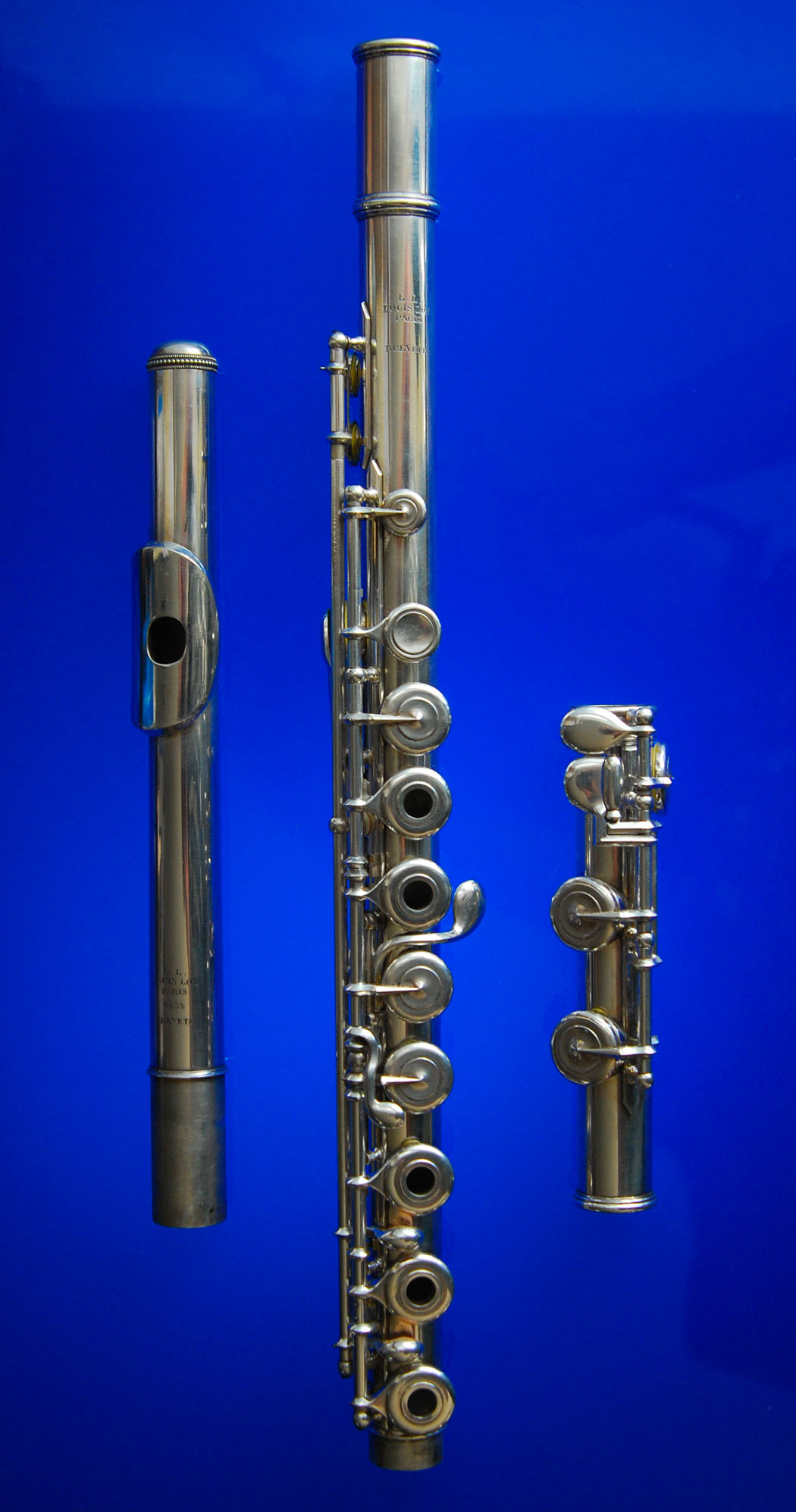
Louis Lot #6434

Louis Lot

Paris, France

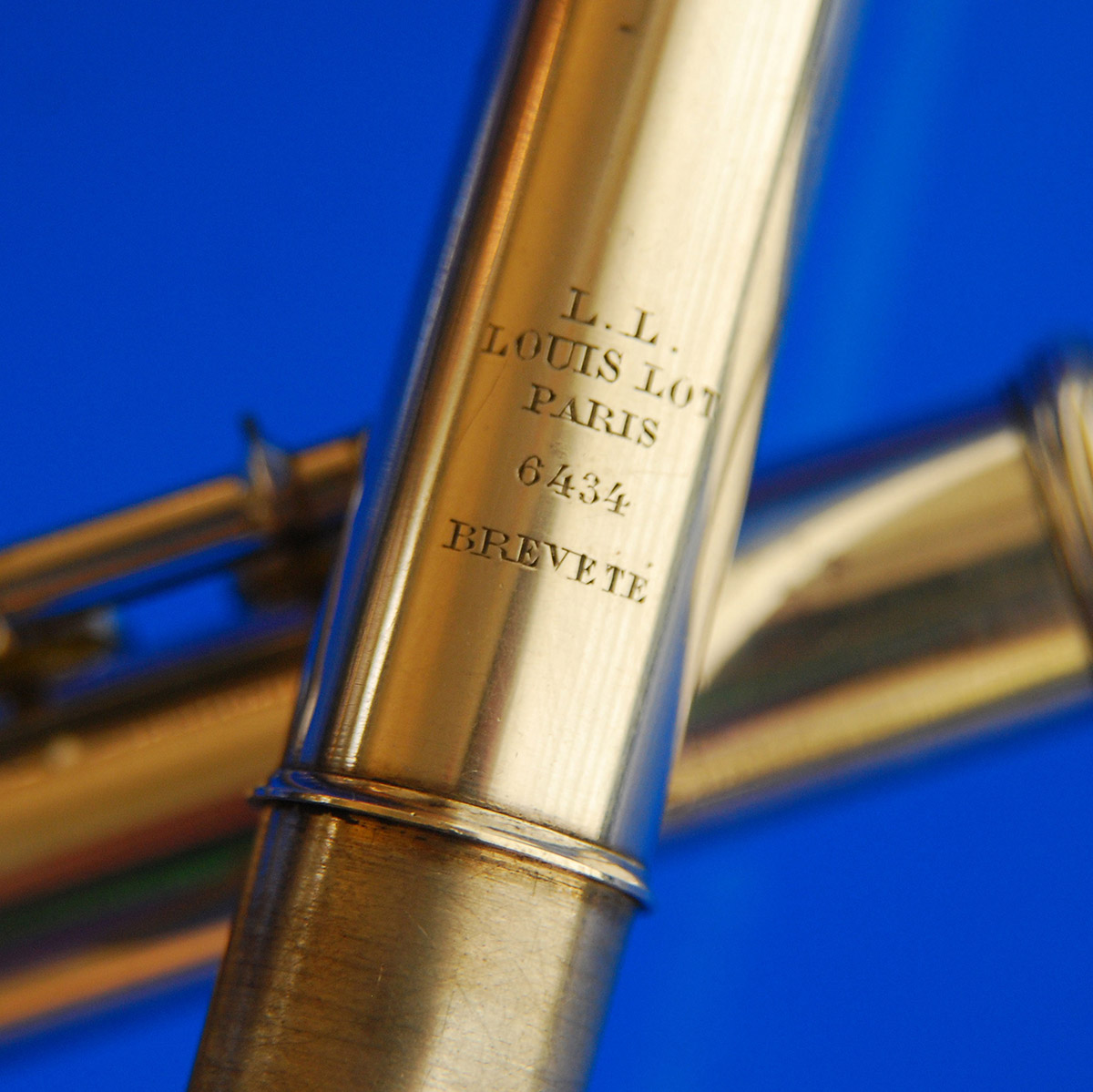
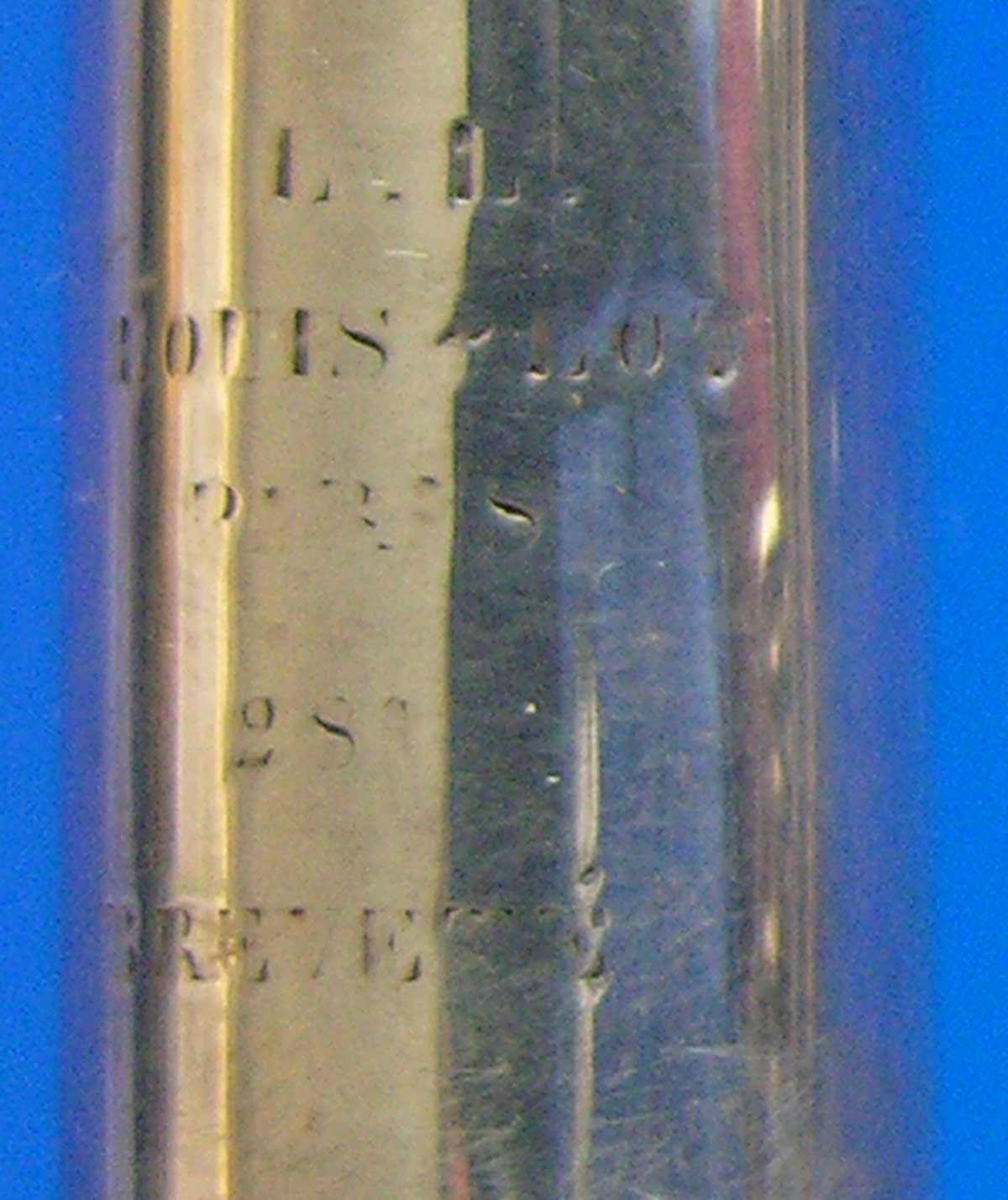
Stamp: Engraved on head and body: L. L. / LOUIS LOT / PARIS / BREVETÉ. Additionally on head, after Paris: 6434

Louis Lot #6434

Comments: This instrument is my favorite of the plated Lot’s that have been known to me. It has a great feel under the fingers, and the very rewarding Louis Lot tone. This flute has has been well loved, well played. Paul Rabinov overhauled it.

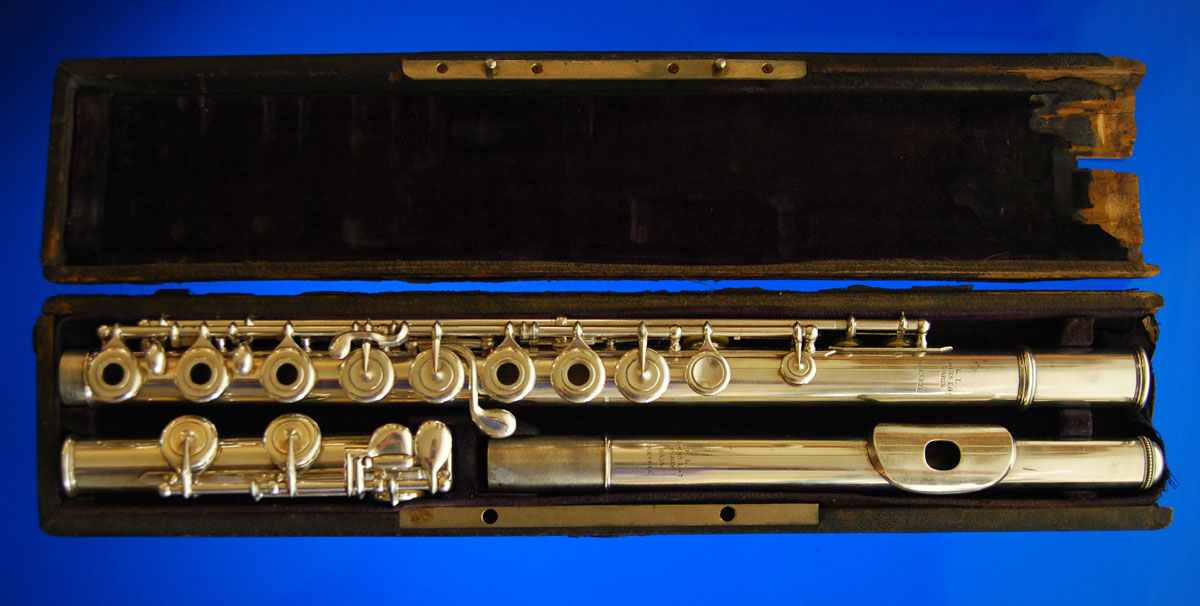
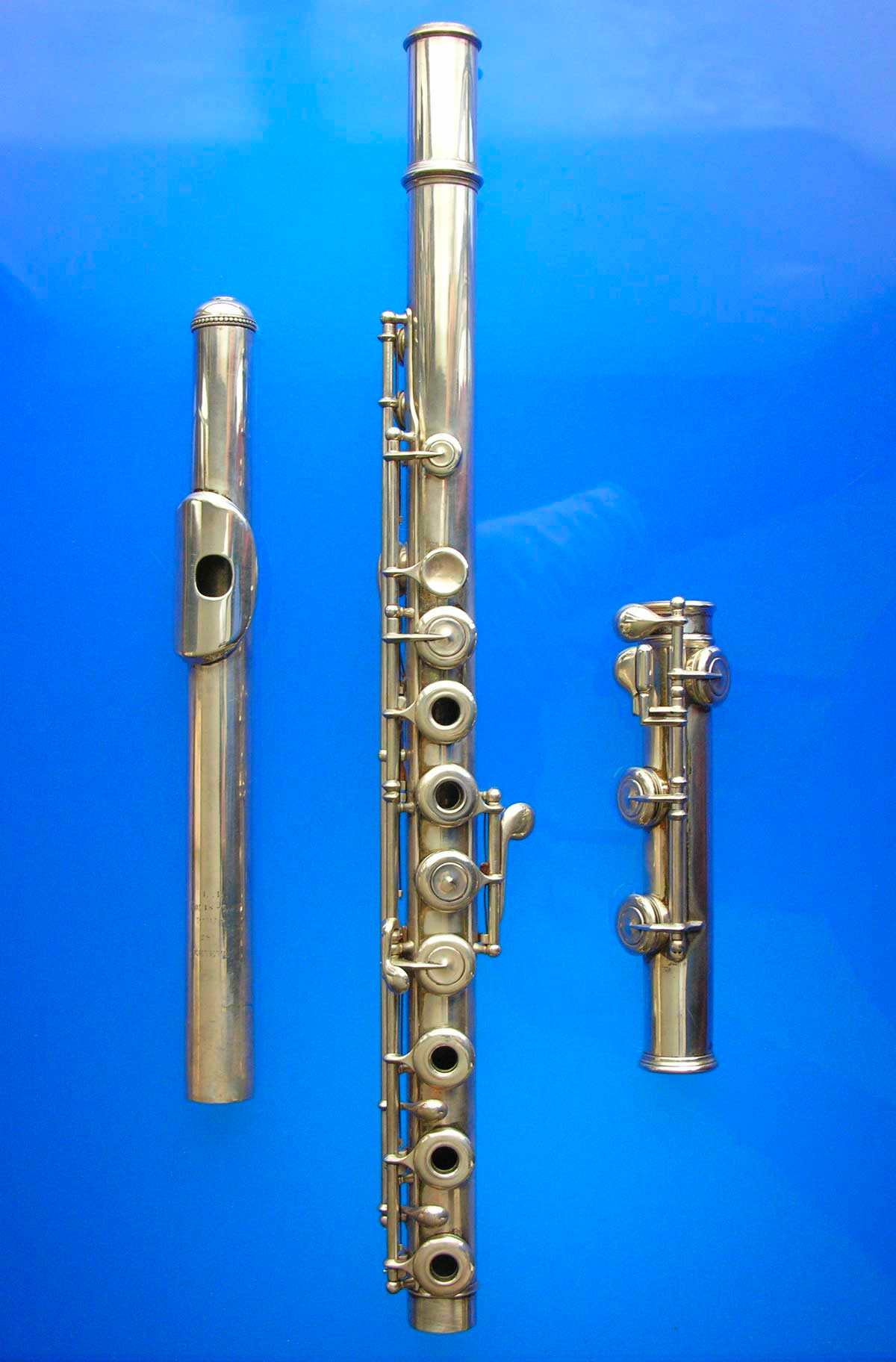
Material: This is the model 7, Maillechort flute with silver plating and C foot. Curiously, Maillechort is named after the 1819 inventors, Maillet and Chorier, who mixed copper, nickel and zinc to make a hard, workable, attractive, and cost effective metal. The lip-plate is silver, with hallmarks. The pad washers are all original French metal. The springs are steel, and possibly original. The crown and cork are the metal screw type, and look fresh from the shop inside.

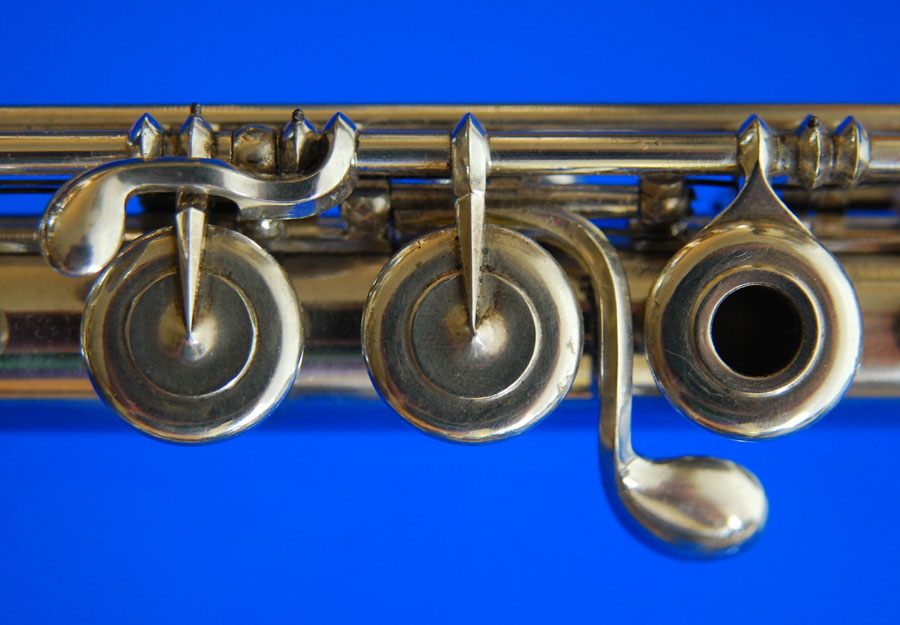
System: This flute is built in the final system of Villette, which remains largely unaltered to this day. It has a C foot, side G#, and Bb trill. There are no adjusting screws. The right hand uses the hanging T, and the footjoint is pinless. The scale seems to be the classic A=435-438 French scale, yet the headjoint is untrimmed and the flute plays at A=440 really well. The sounding length is just a whisker over 600 mm; the A=435 flutes were built at 605mm. Thus this appears to be one of the rare Louis Lot flutes intended to play at A=440.
Condition: This flute is a very fine example of the flutes made during Taffanel’s professorship at the Conservatoire. This is the flute his students would receive for first prize at the Conservatoire. The tone is classic Louis Lot, yet the instrument shares a bit of the volume and texture of the 20th century flutes to come. It has been well used, such that the mechanism has had to be swedged, yet entirely unabused. Nothing has been changed from the day of delivery, except the pads and some adjustments to take out key movement. This is a very lovely player, in near perfect condition.

Pitch: Pitched at A=440, apparently originally.

Sounding Length: Sounding length 600 mm

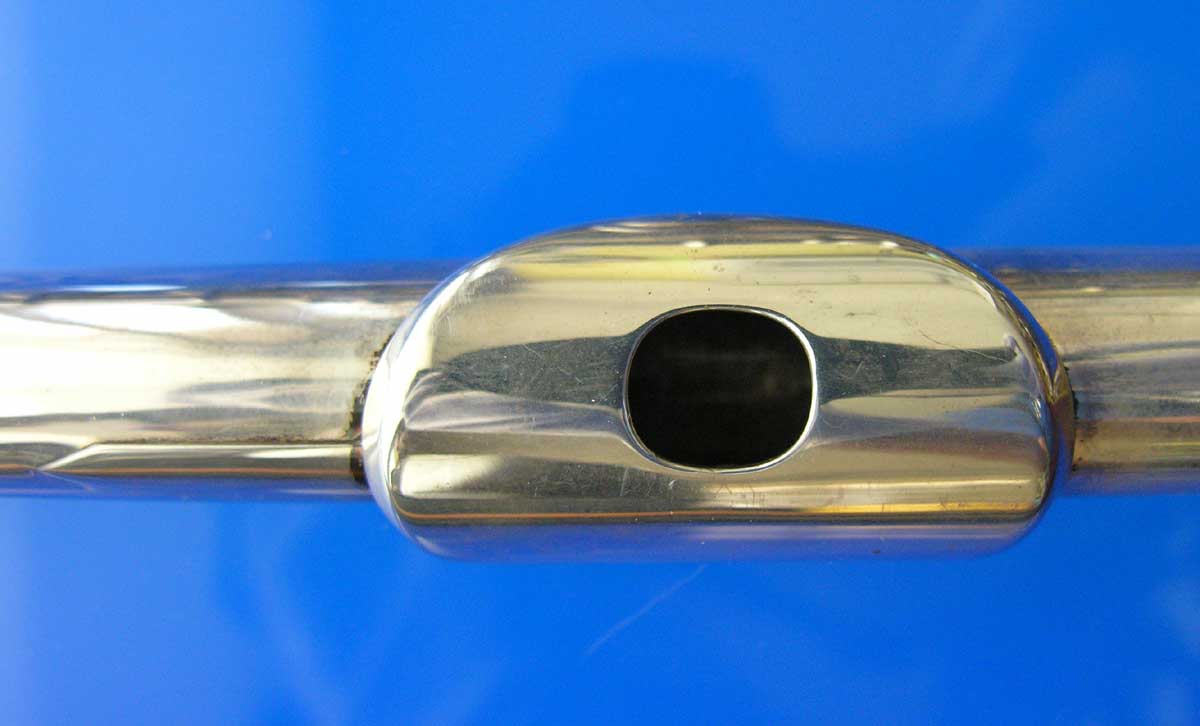
Measurements: Embouchure 11.9 x 10.0. Riser 4.22mm/ 4.39mm. Tube thickness .014″

Weight: 384 g.

Case: In possibly the original case, which is in poor condition.

Louis Lot #6434

This flute is in excellent original condition, and is a lovely player. It was one of the few Lots originally made to play at A=440.

Louis Lot #6434
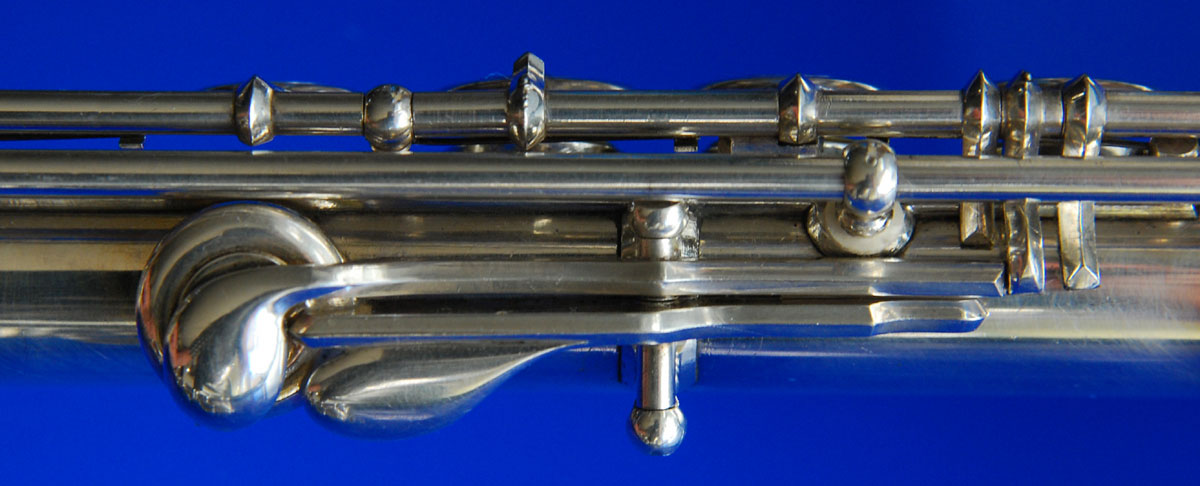
The clear and precise lines of Barat show that he was more stable than the talented yet yet occasionally wayward Debonneetbeau. Indeed, Barat brought the firm back into favor after earlier issues with Altés. The trill key is to Bb, unlike the previous B trill of Lot.

Louis Lot #6434
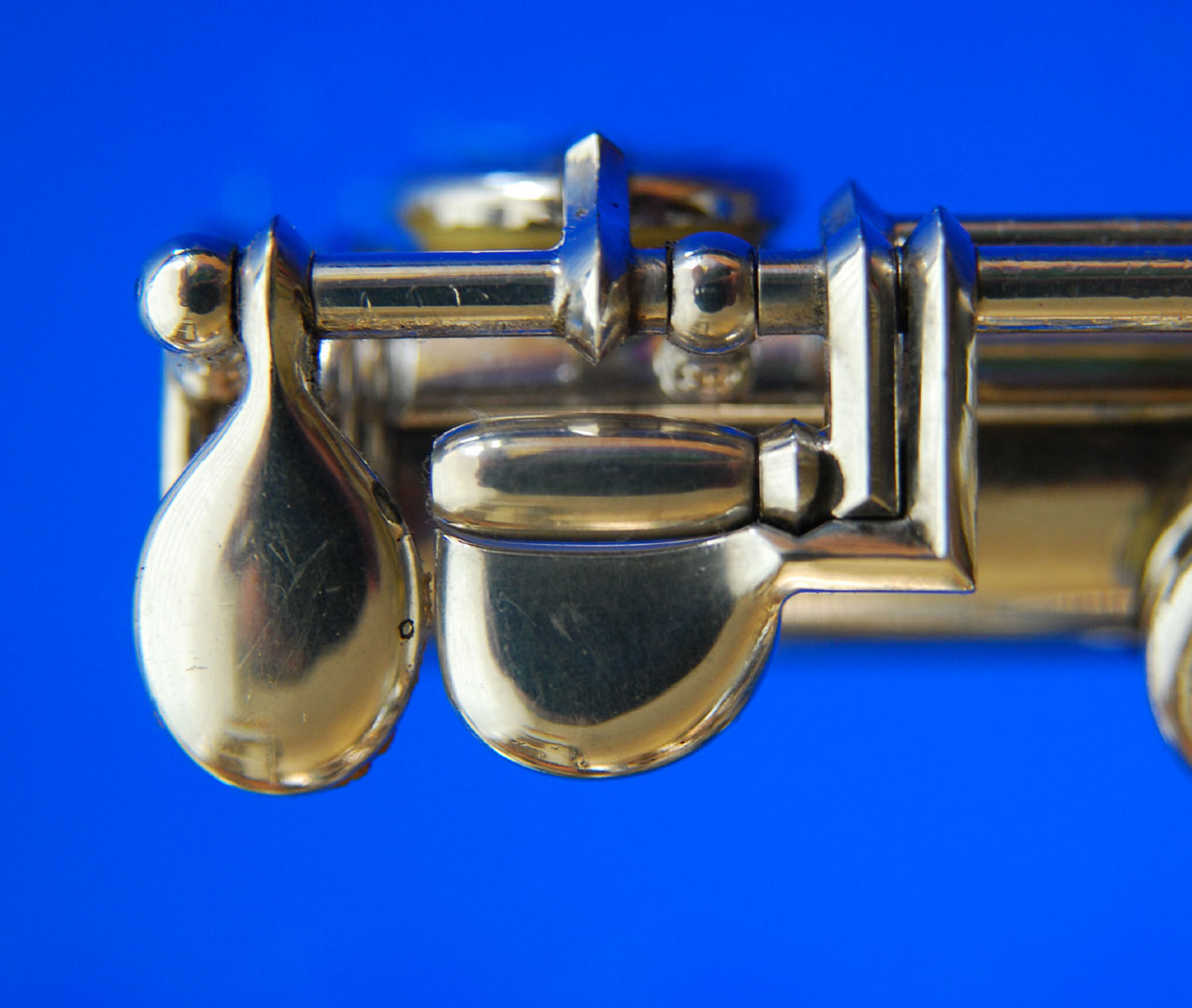
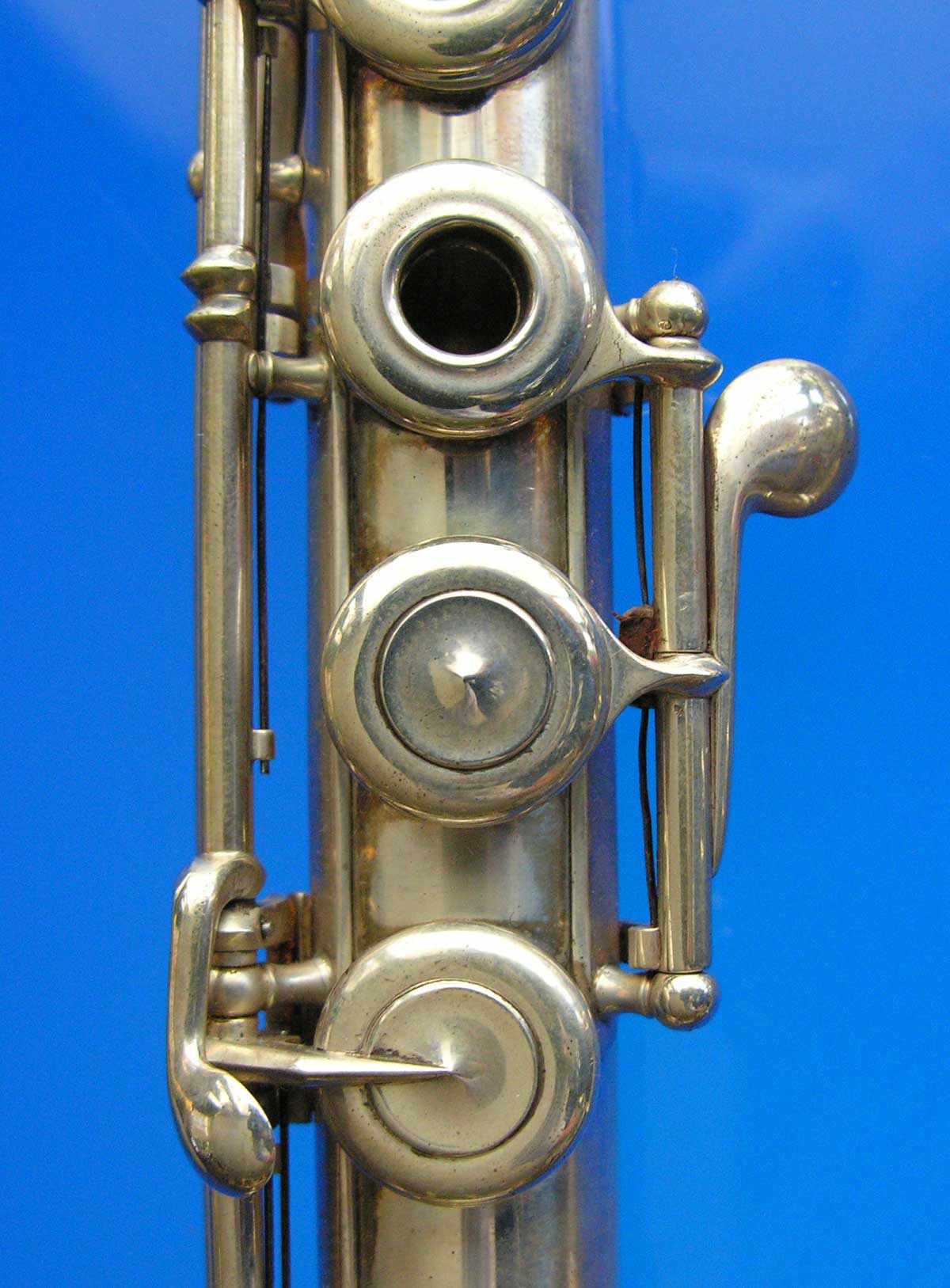
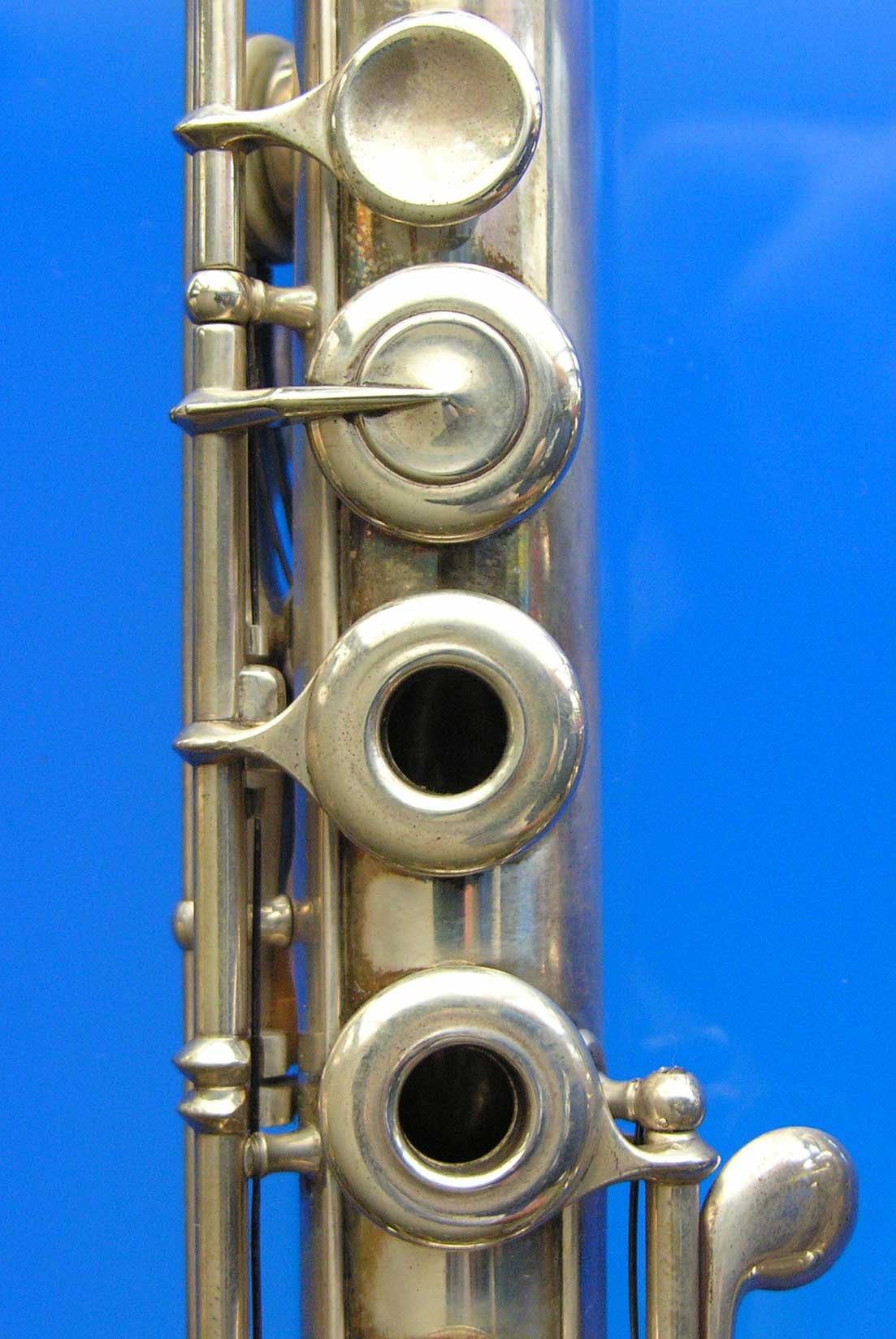
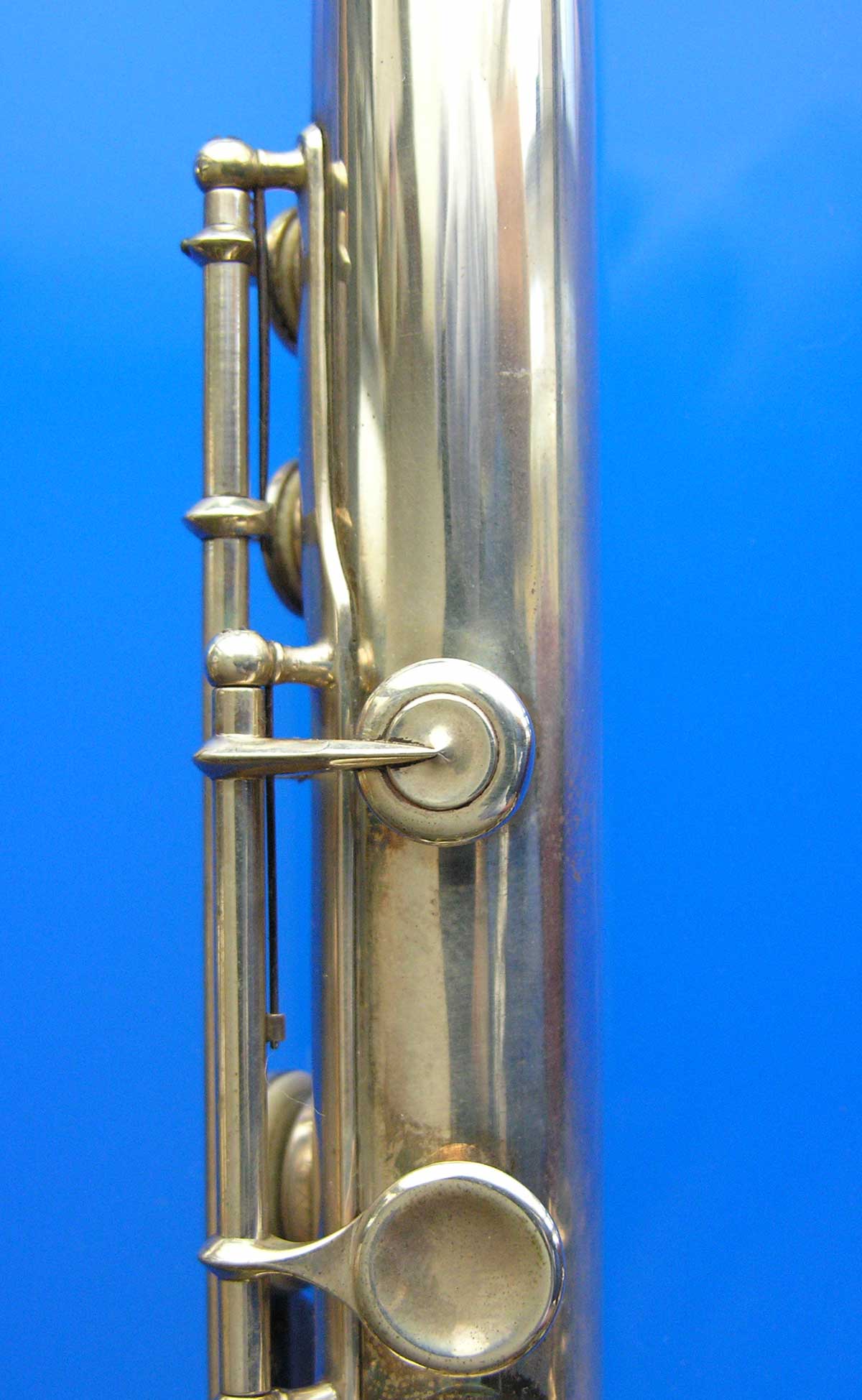
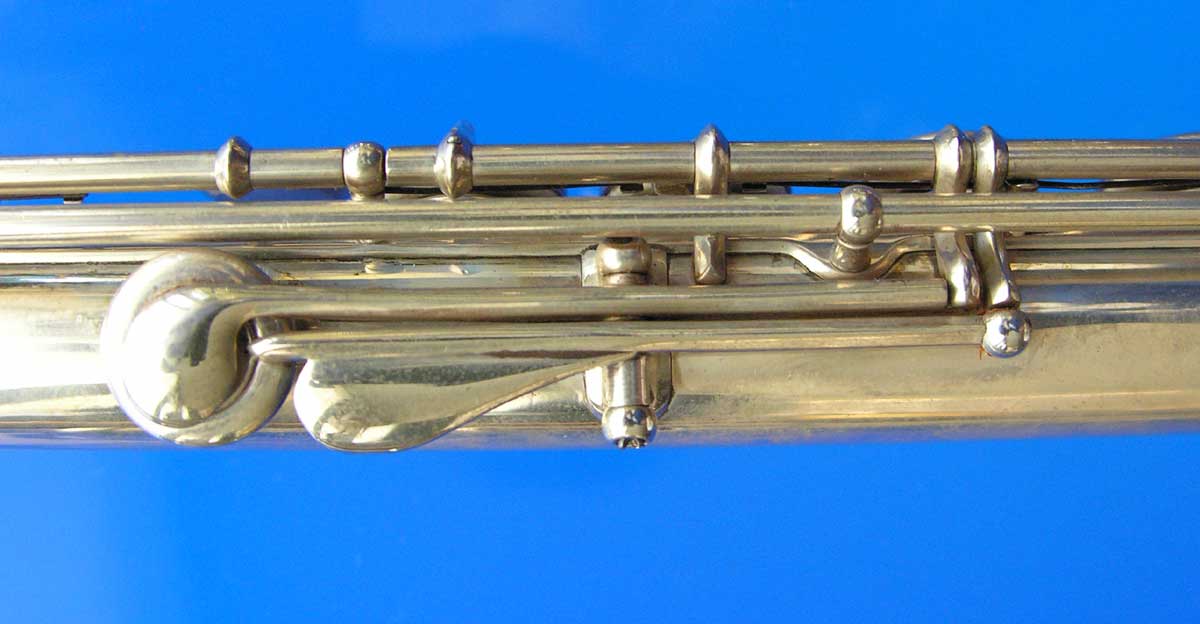
Barat’s footjoint touches show a bit more curve on top of the teardrop D# key than his predecessor’s, and a new beveled design just to the right of the C# roller.

Louis Lot #6434
No plating is missing from the thumb key, showing that this flute was carefully used, and not to excess. The thumb key tail has an elegant curve, possible since the trill is now to Bb.

Louis Lot #6434
The underside of the footjoint keys shows the original French pad washers, and the very fine finishing work of Barat.

Louis Lot #6434
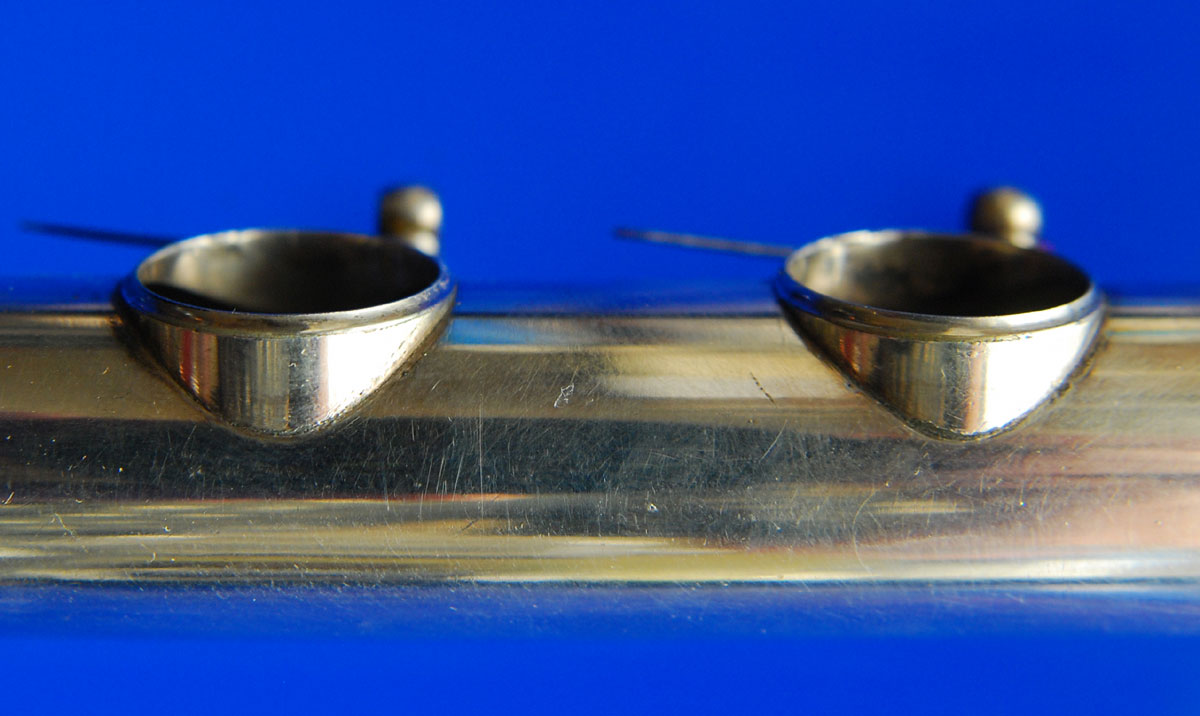
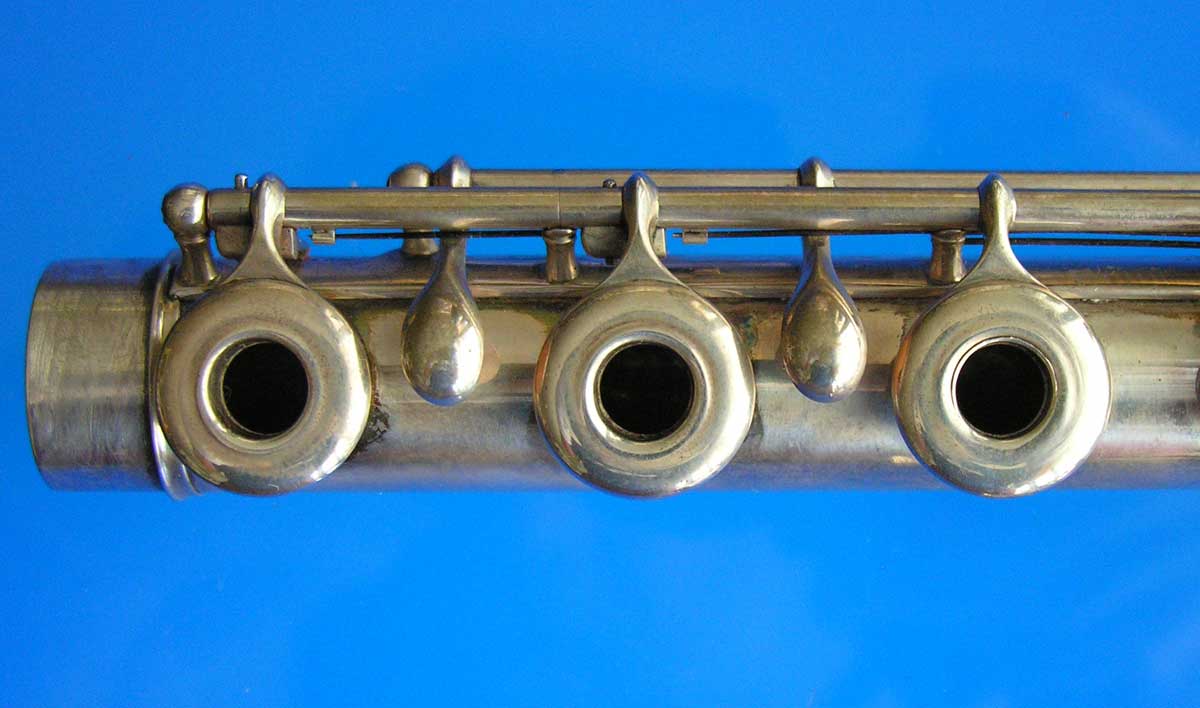
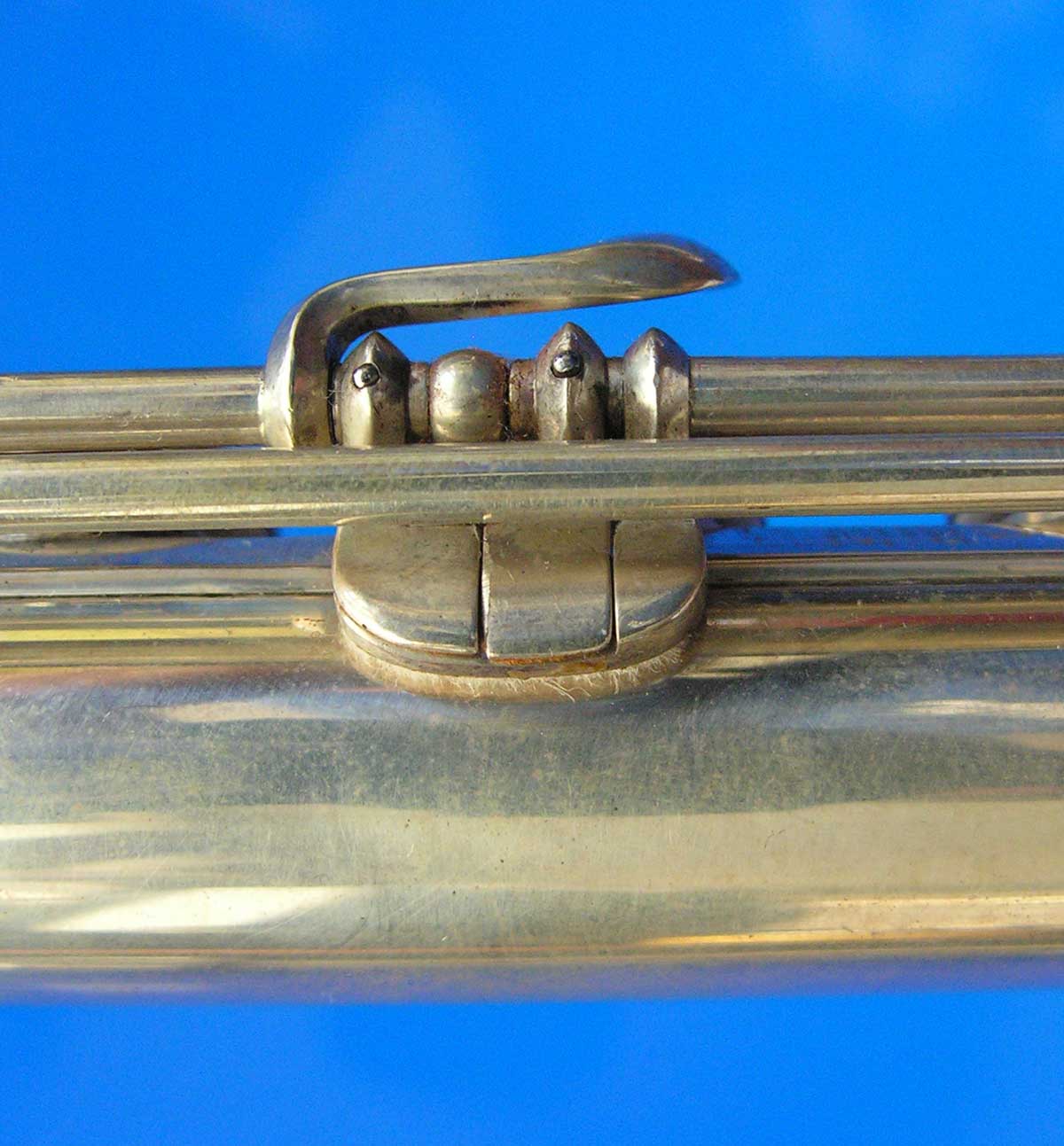
These are the classic Louis Lot tone holes. The rims are cut with a curve to the thinned top edge. Barat actually also offered toneholes with straight tapered rims. The solder seam is visible where the toneholes meet the tube.

Louis Lot #6434
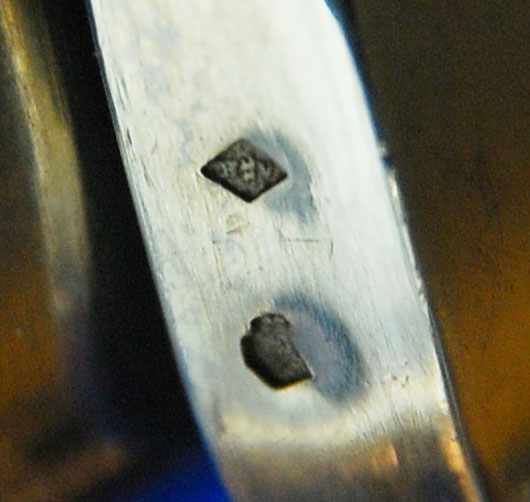
Although the body and keys are plated, the lipplate is of silver. Here we see the hallmarks used by the firm at this time. The diamond shape has inside, as registered by H. Villette c. 1877. The other stamp is a boar’s head, indicating silver of Paris manufacture.

Louis Lot #6434
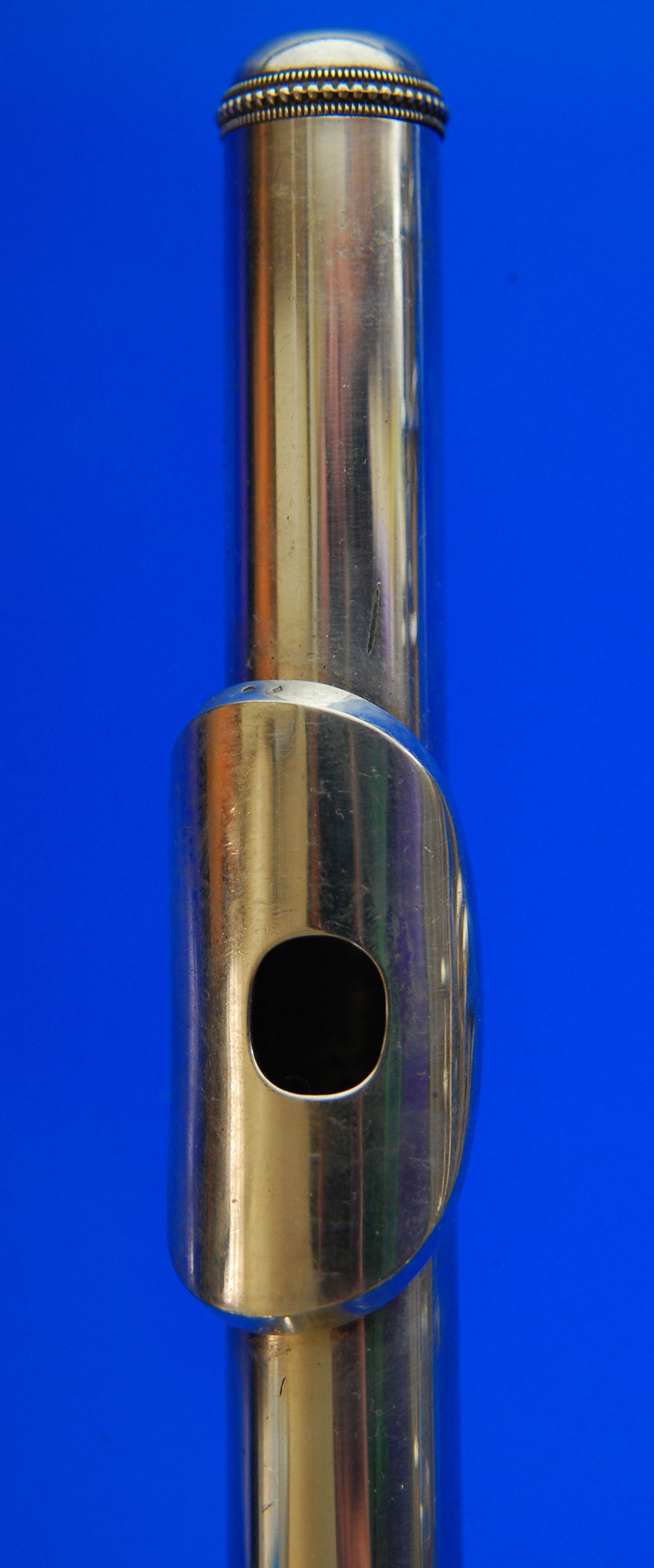
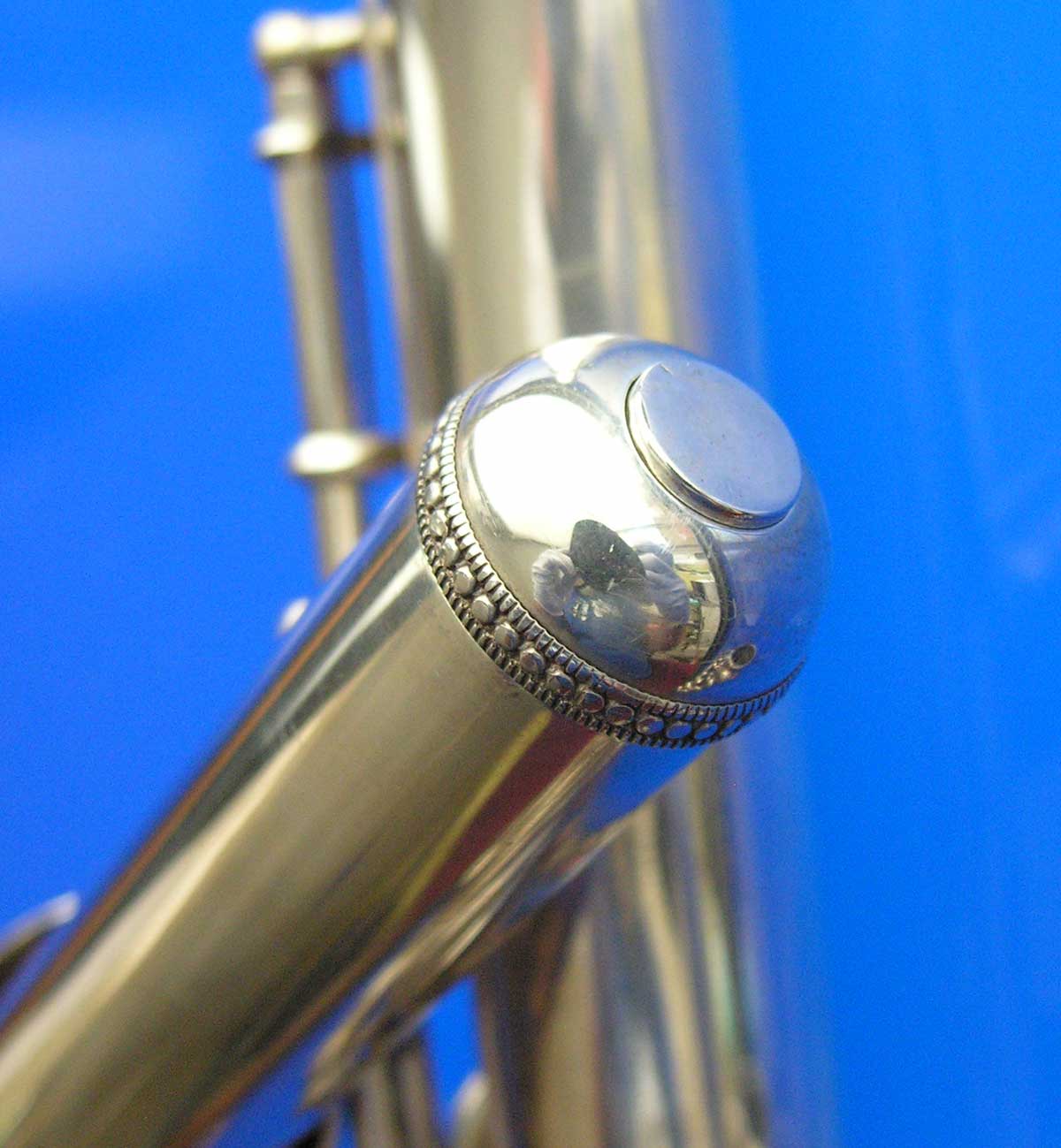
The beautiful lipplate and crown are completely original, with very little wear. Inside the headjoint under the crown looks brand new. The embouchure measures 11.9 x 10.0 mm.

Louis Lot #6434
Although the case is damaged and missing one end, the flute has miraculously survived without any harm. We cannot guarantee that they were together when the accident happened!


Louis Lot #281

Louis Lot

Paris, France

Stamp: On headjoint only: L. L. / LOUIS-LOT/ PARIS/ 281/ BREVETÉ

Louis Lot #281

Comments: This beautiful instrument displays the absolute simplicity of the Louis Lot flute. It took absolute genius to render Theobald Boehm’s lengthy ideas into the perfect simplicity of this flute. The original record exists for this flute, and reads: “15 Mai 1858. Doit Petiton à Paris Une flute Cylindrique, tubes et cléfs en argent descendant à l’Ut, avec boite velour bleu, No.(281)…………….365″”.” Thus we have here a flute of silver with a C foot, in a case with blue velour interieur, evidently ordered by Petiton (of Paris, at the instructor’s discount price of 365 francs, when the list price for Lot’s model 5 was 500 francs. Today, the case for this flute, which may be original, is stamped in gold on the top, “A. GELLE”. From Gelle, the instrument made its way to Mr. Vito Pascucci, former owner of the G. Leblanc Corporation. Prior to and just after Vito’s retirement, many instruments were discarded or donated to needy students. This flute was among the instruments to be discarded. The current owner rescued it from the dumpster and was given permission to keep it. This instrument weighs much less than any other flute we have weighed. At 322 grams (11.5 oz), it is 22 grams less than #1551, and 45 grams lighter than #742. The silver tubes are very thin. The headjoint is between 9-10 thousands of an inch, and the body about 13 thousands. This instrument to exemplifies the beautiful and rich tones for which Louis Lot has long been famous. This flute, Louis Lot’s 40th silver flute, would have been made for players and audiences more used to the old wooden sound.

Material: Made of silver, with silver lipplate. Steel springs. Gilt pad washers. Open hole grommets appear replaced with later Lot grommets, or they were made with an unusually large overhang into the open hole. Cork screw of turned wood with silver cap.

System: This is Louis Lot’s model 5, silver flute with C foot. Trill to the thumb B key. Dorus G#.

Condition: We have graphed the tone hole placement from this flute onto Boehm’s schema. As far as I can tell (and I find the schema confusing), this flute was made at A=438, just as one might expect. The headjoint has been cut an extra 3 mm.

Pitch: We have graphed the tone hole placement from this flute onto Boehm’s schema. As far as I can tell (and I find the schema confusing), this flute was made at A=438, just as one might expect. The headjoint has been cut an extra 3 mm. Plays well at 440.

Sounding Length: Current sounding length is 586 mm. with the headjoint all the way in.

Measurements: Embouchure wall 4.7 mm. Emb 11.75 x 10.2. Scale 220.5 mm

Weight: 322

Case: The case may very well be original, although the gold stamped name “A. GELLE”, and certainly the ridiculous strap lock, appear later. The flute fits perfectly in the case.

Louis Lot #281
The entire headjoint has been heavily buffed, yet the number 281 is clearly visible.

Louis Lot #281
The right hand mechanism shows the extraordinarily effective simplicity of the Lot design.

Louis Lot #281
The Dorus G# was extremely clever. Cleverness was generally eschewed in favor of simplicity, and the side G#, as soon as it was invented, had a slight edge.

Louis Lot #281
The keys on this flute are heavily worn from use, not from buffing, judging by the direction of wear.

Louis Lot #281
The body is unstamped, yet is clearly a very early Lot body. Of course, it has a one-piece strap.


The thumb key retains the beautiful ball-end, which Lot introduced many years earlier on the Godfroy model conical flutes. This was eventually abandoned.

Louis Lot #281
This sweet and early backclutch is remarkably undamaged, considering the love for buffing seen elsewhere on this flute.

Louis Lot #281
The crown is original, and uses the turned wooden corkscrew inside.

Louis Lot #281
The lipplate and headjoint received a knock at some point, causing the seam to part ever so slightly. This has been repaired with a silver strap, and the lip was resoldered on, including some extra solder where the tube was slightly out of round. Everything looks original, nonetheless.


Are You Ready for SensorWorld?

Sensors, sensors, everywhere sensors. In our clothes, our shoes, air conditioners, cars, diapers and beds. And what are all these sensors doing? They’re collecting and analyzing data of course – billions of discrete pieces of information every picosecond of every day so we can, a) make informed decisions and, b) automate all of the things connected by the IoT (Internet of Things). Soon sensors embedded in my pajamas will determine I’m dehydrated from having a little too much fun the night before, then send a message to the 3-D food printer in my kitchen to make a drink designed to replenish my electrolytes. Sensors will also heat my house the minute my car heads for home and tell me when my 16-year old is driving over the speed limit.

Sound far-fetched? It shouldn’t.

Recently, Senior Editor of Wired Magazine, Bill Wasik, reported, “A new device revolution is at hand: just as mobile phones and tablets displaced the once-dominant PC, wearable devices are poised to push smartphones aside.” In truth, the U.S. sensor market is expected to surpass $15 billion in 2016, causing On World to forecast that by 2017, global shipments of wearable, implantable, and mobile health and fitness devices will be up 552% from 2012.

Welcome to SensorWorld.

Now sensors and data analytics are preparing to go where ‘no man has gone before.’ Tackling an activity we spend a third of our lives ignoring: sleep! Why sleep? The National Sleep Foundation reports that 43% of Americans rarely get a good night’s sleep, and 60% experience a sleep problem almost every night. A recent Gallup poll revealed that since 1942, the amount of sleep we get has decreased roughly a half an hour per night and continues to trend downward. And the Center for Disease Prevention and Control (CDC) claims over 9 million Americans currently rely on a pharmaceutical to fall asleep.

According to technology pioneer, and inventor of the world’s first camera phone,Philippe Kahn, our growing problem with sleep began during the Industrial Revolution when “the mythical eight-hour sleep night” was fabricated to extract longer hours from factory workers. “Before the Industrial Revolution,” Kahn explained, “people were mostly sleeping in two shifts… nobody was really sleeping eight hours straight.” He continued, “The concept that we have to sleep in uninterrupted ways all the time, in a perfectly quiet environment, in a perfectly dark room… to me is a misconception and something that is misleading people to understand how to optimize their sleep.”

Kahn stumbled on the idea of “budgeting” sleep on a record-setting, two-man Transpacific sailing trip in 2009. With a two-person crew, each person is allowed to sleep for only brief periods of time. So Kahn decided to use his sailboat as a laboratory to determine the amount of sleep that produced the highest levels of alertness and energy. He discovered that number was twenty-six minutes. From that point on Kahn began modeling his sleep after his dog – short periods of deep rest with the ability to wake at a moment’s notice in a high state of “readiness,” and then quickly return to a deep sleep. Kahn claims that from an evolutionary standpoint this is the way humans were designed to sleep – they function best when sleep is “budgeted” for, and “optimized,” in the same way we do investment planning – only when it comes to sleep, returns are measured in terms of health and productivity.

Enter Kahn’s latest breakthrough in sensor and data analytics technology: the Smart Bed. The Smart Bed replaces the traditional “box-spring” with a sensor-based unit designed to monitor movement, body temperature and other metrics so we can optimize when and how much we sleep. The Smart Bed and Sleep Tracker was developed by Kahn’s company Fullpower – an enterprise focused on precise, non-invasive data monitoring and analysis. According to Kahn, sleep was a logical application for his company because of the number of hours humans spend sleeping, the mythology surrounding the need for a continuous eight-hour rest, and his personal revelations while sailing. Kahn observes, “Sleep is a bit like the deep ocean. We know it is there but we don’t understand it well. Modern science doesn’t understand sleep very well because it is very difficult to monitor sleep in a non-invasive way.” With the new Smart Bed, Kahn is poised to revolutionize the way humans rest and the effect this will have on efficiency, output, health and ultimately, longevity.

While Fullpower is pushing the frontiers of sleep technology, other companies are leveraging sensor and data analytics technologies to optimize other areas. Pixie Scientific, is embedding sensors into “smart diapers” that will allow diseases, dehydration and nutritional deficiencies to be detected in diapers. Intel’s new Smart Band tracks, monitors and analyzes the tremor patterns of Parkinson’s patients, and a new generation of smart pills and monitoring patches from Proteus are in the works. Peter Reinhart, Director of the Institute for Applied Life Sciences for the University of Massachusetts recently revealed that sensor technologies would soon shift from diagnosis to treatment, “As we get better and better at this, we’re going to find that new therapeutic options are going to be open to us. Identifying an Alzheimer’s patient at the [observable] behavioral point, when 70 percent of the brain mass has already disappeared, really limits the number of therapeutic options you can provide that patient. If you could identify someone like that seven or eight years earlier, it now opens up a very different array of intervention strategies.”

But, as Kahn points out, collecting and translating data is only half the story. The other half is connecting to devices, which will be automatically instructed by the analyzed data. Google’s Nest offers a home app that uses sensors, analytics and the internet to connect everything from your thermostat to your fire alarms and home security system. Apple has launched a similar IoT application called HomeKit. According to Kahn, the Smart Bed will have the ability to turn your bedroom thermostat down when your body is at rest and turn the heat back up when the bed senses you are waking. It will lift the shades in your bedroom, signal the hot water heater to ready the shower, and the coffee machine to prepare your coffee just the way you like it. And if that sounds like the stuff of science fiction, look again. Theo Priestly, technology strategist and Forbes contributor claims the IoT will be comprised of 50 billion interconnected devices before 2020 – representing a whopping $19 trillion market. Fitbit, smart watches, smart clothing, diapers and beds are just the beginning. Within the next five years, sensors will monitor, customize and automate everything.

Are you ready for SensorWorld?

Follow Rebecca Costa on Twitter: twitter.com/rebeccacosta
Read the original article @ Huffington Post


The Costa Report interview with Philippe Kahn

Week of Mar 21, 2016 : Philippe Kahn

philippe-kahn-costa-report

Philippe Kahn is a entrepreneur, technology innovator, and founder of four technology companies: Fullpower Technologies, LightSurf Technologies, Starfish Software and Borland. Kahn is credited with creating the first complete camera phone solution, sharing pictures instantly on public networks, and is considered a pioneer for wearable technology, and intellectual property. He is also the inventor of 100 technology patents covering wearable & IoT, eyewear, smartphone, mobile, imaging, wireless, synchronization and medical technologies. Currently the CEO of Fullpower, Kahn leads the creative team behind the MotionX 24/7 wearable technology platform, an innovation at the core of solutions by Nike and Jawbone among others.

Vist Rebeccacosta.com to listen.


Wear It’s At

Wearable technology is changing how we exercise, and even how we live—but you ain’t seen nothin’ yet

goodtimes-wear-its-at

We live in an age where technology is intertwined into almost every aspect of our lives. Perhaps the only place it hasn’t yet completely conquered is our own bodies. That may be why mainstream culture greeted certain wearable technology like Google Glass with distrust and even outright hostility—after all, once technology is on us, isn’t it only a matter of time before it’s in us, or simply is us?

But Philippe Kahn, best known as the inventor of the camera phone, and now CEO and founder of Santa Cruz-based Fullpower Technologies Inc., thinks that attitude is rapidly becoming a thing of the past. More and more consumers are embracing gadgets like FitBits, smart watches, smart beds, and even fitness-tracking smart shoes for their potential to revolutionize the fitness and health care industries. These wearables can track every aspect of daily life, from sleep patterns to steps taken to heart rate, calories burned, body weight, and time spent standing.

Meanwhile, Kahn’s company is already working on all sorts of ideas that will help usher in the next era of wearable tech. Why is he betting the industry will continue to grow? Because knowledge is power. When it comes to improving our health and lifestyles, extremely individualized data can go a long way. And when we decide to make a change and do something about it, wearable technology can provide immediate feedback on our progress.

“It’s simple and amazingly efficient,” Kahn tells GT. Wearable technology provides the kind of information that can get results fast, he says, which feeds its popularity. “Without any other changes, if Ms. and Mr. Everyone are just a little more active and sleep just a little more, health immediately improves.”

Whereas current fitness wristbands and watches collect data mainly through an accelerometer that tracks step-related movements or lack thereof, devices of the future will be able to distinguish among many different and diverse types of exercise, as well as provide data about blood sugar, hydration, hormone levels, and beyond. Additionally, whereas a current concern among wearable technology users and makers is a lack of privacy, the wearable tech of the future will use authentication techniques that are unique to every individual, such as heart rhythm.

Current wearable fitness trackers are fairly limited in the types of exercise they can track, and this is especially true if the exercise doesn’t involve taking steps. The next generation of wearable tech will not only be able to “learn” and measure new exercises performed by the wearer, it will also be able to more accurately track activities like weight lifting, swimming, and even something like playing an instrument that while usually performed stationary is nonetheless a legitimate workout for the upper body. Future fitness wearables will also be able to instantly access the wearer’s diet and medical history and even be able to “critically think” and provide advice. Smart sports gear is also just around the corner, such as a basketball that has an implanted computer and can track made baskets and provide feedback on shooting form, or a football that can help aspiring quarterbacks throw a tighter spiral.

PICTURE OF HEALTH

Exercise and sport aren’t the only frontiers for wearable technologies. They show even greater potential to improve personal health on a large scale because they provide a larger amount of more accurate data to a doctor or health care provider. As long as the patient consistently wears his or her health-and-fitness-tracking wearable technology, a doctor can easily use the data from the device to get a more accurate picture of the patient’s lifestyle. This will allow doctors to make better decisions and diagnoses than ever before. Eventually, wearable technology will allow doctors to treat patients remotely, without having to see them in person—transforming health care for travelers, those who find it difficult or impossible to visit a doctor’s office, and pretty much everyone else.

Some examples of cutting-edge health care wearable technology include body-worn sensors and contact lenses that monitor blood sugar levels and could revolutionize the care and management of diabetes, an increasingly common condition in America. Companies are also developing smart bras that track breast health, as well as wearable technology that could help a person quit smoking by detecting cravings and then releasing medication before the smoker falls off the wagon and lights up a cigarette. There is even ingestible technology being developed that is powered by stomach acid and could monitor the timing and consistency of when a person takes their medications. This could provide doctors with unprecedented information about the adherence to and effectiveness of prescribed therapies.

FUZZY DATA

Wearable technology, however, is still in its infancy, or, at most, its toddlerhood. And there are plenty of growing pains.

One challenge is the drive to constantly improve the accuracy of the data these devices provide. When current wearable technology can only provide estimates on steps taken, calories burned, or anything else, it simply isn’t good enough. This can be a major problem, especially if health care providers are basing recommendations for medication, exercise, diet, and lifestyle on the accuracy of this data.

“Accuracy is important, as that is key work that Fullpower focuses on more than any other company on the planet,” says Kahn. But for most current applications of wearable technology, he believes this issue shouldn’t be overblown. “Remember that the benefits come from being more active and sleeping a little longer, not necessarily understanding every detail of everything.”

At this point, there is little industry regulation and no governing body to make independent verifications of wearable technology data, and to make sure standards are upheld. Greater industry regulation with independently verified data will go a long way toward legitimizing the entire industry. “We sure hope this happens soon, as it will make Fullpower’s technology shine even more,” says Kahn. “My understanding is that there are a couple of labs who are evaluating the business opportunity.”

There is also the issue of interpretation of all this data—without it, the information is basically useless. “It’s not just quantified self-measuring, it’s using big data science to give meaningful insights,” explains Kahn. “For example, Fullpower’s new Sleeptracker® Smartbed will soon start being deployed by major bedding manufacturers and will provide lots of insights and tools to improve sleep.” Kahn says the insight the smart bed provides is based on data from more than 500 million nights of detailed recorded sleep, and calls it “the greatest sleep study ever.”

Wearable technology not only needs to be stylish, in Kahn’s view, it also needs to be at least somewhat invisible or at least seamlessly integrated into a person’s “look.” Making a one-size-fits-all product that also has universal aesthetic appeal is no small challenge. Just consider how many different companies sell widely diverse products that are all essentially either a shoe, a shirt, a hat, or anything else wearable.

“We believe that wearable tech and fashion are tied at the hip. We are focused on making non-invasive technology that is green, invisible and beautifully discreet,” says Kahn.

Battery life is another challenge. “Fullpower is working on energy harvesting off the host. It’s no different than getting solar energy to work in the home,” says Kahn. His company recently launched the Movado smartwatch that can run for over two years without a charge. Whether it’s using body heat, body movement, or some other source, renewable energy is a big part of the future of wearable technology.

WEARABLE FRONTIERS

As bright as the future may be for wearable fitness technology, the possibilities for merging man and machine on a larger scale may be even more astounding. For example, Lockheed Martin has developed an unpowered exoskeleton that makes heavy tools feel almost weightless, as if they are being used in zero gravity. This kind of technology could revolutionize many industries including construction, demolition, disaster cleanup, and first-responder situations. Still other exoskeletons are being used to help paraplegics regain the use of their legs and walk again. There is even wearable technology being developed that turns sound into patterns of vibration felt on the skin from a garment that, with training, can help the deaf “hear” the world around them in a similar way to how Braille turns letters and words on a page into tactile representations that allow the blind to “see.” Some people are even pushing the boundaries of our senses by implanting magnets into their fingertips in order to be able to “feel” electromagnetism.

The incredible neuroplasticity of the human brain allows for all of this remarkable technology to be seamlessly integrated into the brain’s representation of the body over time. For example, ask any experienced surfer where the body ends and they will all tell you that eventually the surfboard becomes an extension of the self. To them, the body does not end at the foot, it ends on the wave.

All of this seemingly space-age technology being closer to our doorstep than most of us thought begs the question: How much technology is too much technology? But the reality is that technology is in many ways the ultimate embodiment of everything it means to be human, showcasing our ingenuity, ambition and creativity. Wearable technology is only the latest expression of an age-old truth: We have always been natural born cyborgs, using technology to transcend ourselves and our biology.

Visit gtweekly.com to view the original article.

Mondaine Wins 2015 Good Design Award

mondaine-wins-2015-good-design-award-1

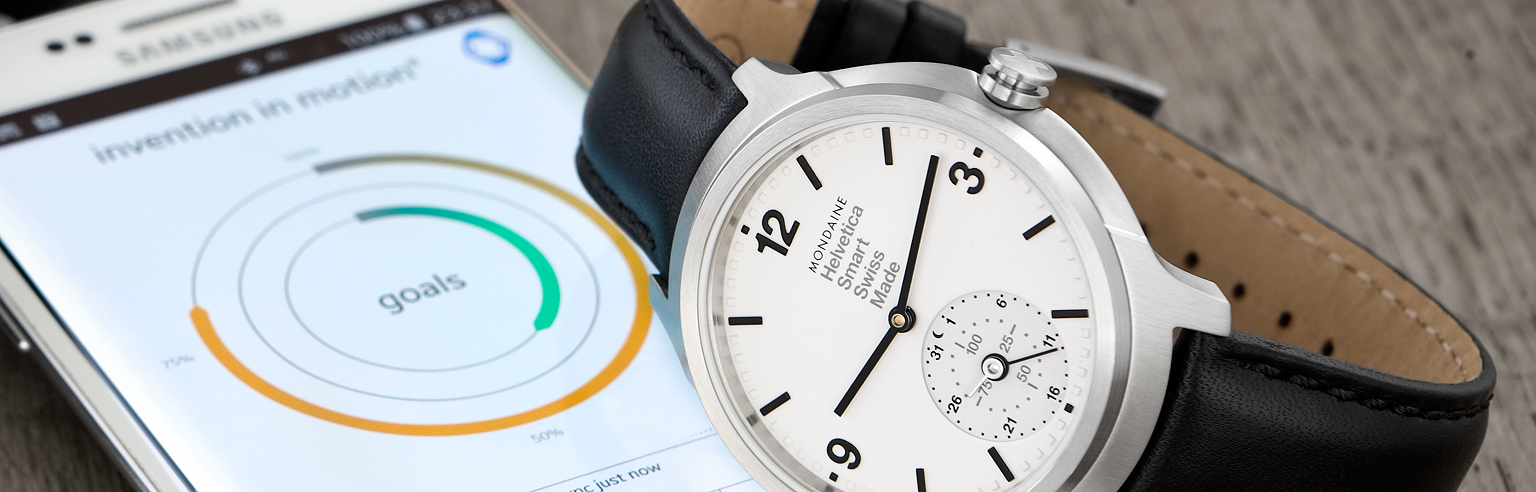
Mondaine has received a 2015 GOOD DESIGN Award for the Helvetica No1 Smart watch.

“Industrial design is about so much more than furniture and lighting,” commented Courtney Robinson, Marlox USA Marketing Director, Mondaine Brand. “Creating a truly good watch involves overcoming a lot of design challenges to reach innovative solutions, and we are honored that the Chicago Athenaeum recognized the Helvetica No1 Smart, Mondaine’s first connected device, with a 2015 GOOD DESIGN Award.”

Inside all Mondaine Helvetica No1 Smart watches is the latest in smart technology focused on monitoring activity and sleep, featuring MotionX activity tracking, Sleeptracker sleep monitoring, sleep cycle alarms, get-active alerts, adaptive coaching and automatic time alignment – all the data from which can be backed up and stored in the MotionX cloud.

The watch does not need to be recharged regularly, boasting a 2+ year battery life. It uses the horological smartwatch platform, power MotionX, which manages the bi-directional communication between the watch and whichever device, be it phone or tablet, it is connected to via the downloaded app. In complete contrast to other smart devices, where the data is shown digitally on the watch, the information is read in an analogue fashion via the sub dial.

Read the original article @ http://www.dexigner.com


© 2001-2026 Musings from Philippe